Footage that stands as evidence
Framing, height and lens chosen for each point's objective. What needs to be identifiable actually is.

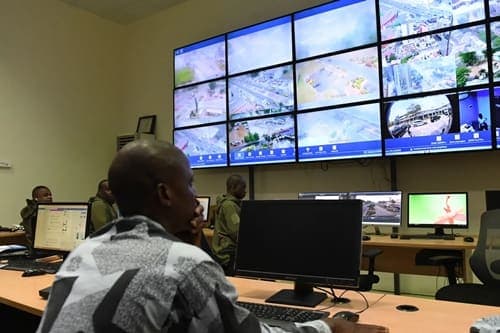
Keep an eye on your premises, wherever you are
A video surveillance installation serves two very different purposes: deterring, and allowing you to understand after the fact. The first depends on how visible the cameras are, the second on the real quality of the recorded footage.
It is on the second point that most installations disappoint. The cameras are there, they record, but the useful frame turns out too dark, too compressed or too wide to make out a face or a plate. When an incident happens, the recording proves nothing.
We design every installation from a written objective for each camera: monitor a flow, identify a person, read a plate. That objective then drives the lens, the position, the resolution and the settings.
These four flaws show up in most of the systems we take over.
Placed five metres up, a camera films the tops of heads. It records that someone passed, but allows no identification.
A camera pointed at a glass door sees only a black silhouette all day long, whatever its resolution.
The incident is reported after the weekend, but retention was set to three days. The footage no longer exists.
A camera unplugged for weeks or a full disk goes unnoticed, because nothing alerts on the health of the system.
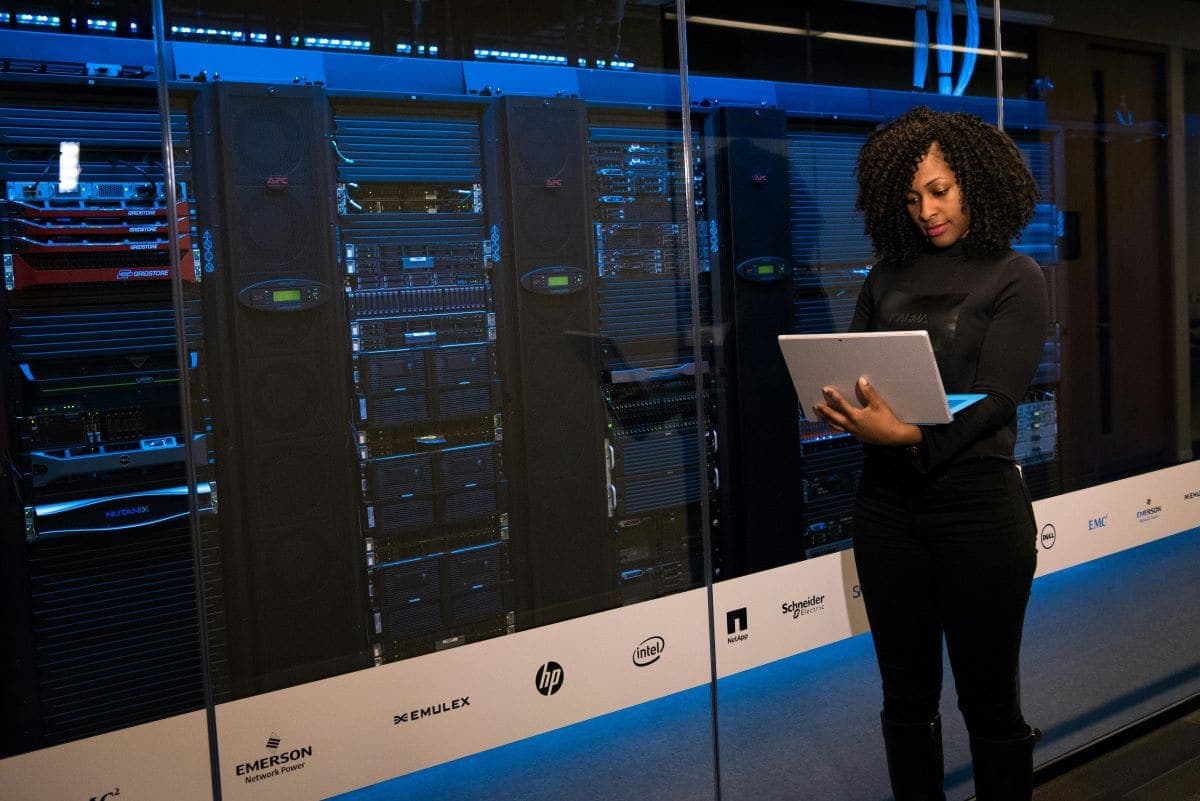
Framing, height and lens chosen for each point's objective. What needs to be identifiable actually is.
Live view and playback from your phone or computer, with different rights for different people.
Detection is configured per zone and per time slot, so what matters is flagged without drowning real alerts in false ones.
Camera, storage and network health are monitored, and preventive maintenance avoids discovering a fault at the worst moment.
From viewpoint study to training the people who will review footage.
The choice follows the scene to be covered, never the other way round.
We walk the premises with you to list sensitive points, entrances, high-value areas and the blind spots that already exist.
Step 1Each camera gets a position, an orientation and a written objective. You approve the plan before any hardware is ordered.
Step 2Camera mounting, network cabling with power over the same cable, recorder installation and protected electrical connection.
Step 3Framing, exposure, backlight handling, detection zones and sensitivity, adjusted by day and by night on every camera.
Step 4Walkthrough of the app, creation of viewing accounts and the procedure for exporting a clip when an incident occurs.
Step 5A badly aimed camera costs the same as a well-aimed one. The difference shows up on the day you need the picture.
Regular till discrepancies and stock disappearing from the back room, with no explanation.
Cameras framed on tills and the stockroom, readable footage and time-stamped playback whenever a discrepancy appears.
Frequent disputes with carriers about the condition and count of delivered parcels.
Coverage of docks and yard, with retention long enough to cover the claim window.
A server room accessible to everyone and no record of visits outside working hours.
A camera on the room entrance, out-of-hours alerts and viewing restricted to management.
Between fifteen and ninety days depending on your choice and storage sizing. Thirty days is a good balance for most businesses.
Continuous surveillance of workstations is regulated. We point cameras at entrances, high-value areas and circulation routes, and we tell you what information notice to display.
Local recording continues normally. Only remote viewing is temporarily unavailable, and footage is accessible again as soon as the connection returns.
Only the people you designate, with distinct rights per camera if needed. Every viewing session is recorded in a log.
Yes. We size the recorder and network with headroom, so adding cameras later does not mean replacing everything.
An on-site survey lets us define how many cameras you genuinely need and give you a precise quote.